Contact Us
Questions, comments, ideas for future content? Contact us below.


Partner at Hirewell. #3 Ranked Sarcastic Commenter on LinkedIn.
Meet the new plan, same as the old plan.
Prediction for 2025: Businesses will repeat past mistakes by hiring internal recruiters for short-term needs, only to lay them off at the first hint of a downturn uncertainty.
Yup, starting my Tuesday in full cynicism mode. Well, not entirely. Implied in my prediction is that hiring is on the rise to begin with. So let’s start there.
Hirewell just had a massive 4 month stretch with August and November being our 2 biggest months since early 2022. We closed 20 large multi-hire solutions (double to triple digit hires) since May 1. Compared to the whopping 5 we did all of 2023.
Now, I’m friends with a lot of other agency owners who aren’t seeing this type of rebound. And that’s because the growth across industries and skill sets are asymmetrical. Finance & accounting, industrial, and sales recruiting (especially in non-tech industries) are booming. More so than things like tech and marketing. But those areas are starting to come back as well.
It really depends what your recruiting focus is.
Anyway, I feel good about 2025 overall. It won’t be the rampant over-hiring we saw in 2021, but that’s not a bad thing.
On top of that, we’re finally hearing contacts in HR talk about hiring internal recruiters. Which is another focus area for us, so that also brings a smile to my face.
Unless of course we see what we saw last time: perm hires made for temporary needs and internal TA folks ending up on the street again a short time later.
Hiring and firing internal recruiters has been the go to playbook since forever. Despite employees being the most critical element to success (and the biggest expense) for most companies, recruiting is still treated as a reactive function by lots of companies.
Thus my cynicism. I’ve seen this movie before.
Except this time, I don’t know if the best recruiters are going to play ball. I mean, who wants to sign up for another round of that? I also know plenty of internal recruiters who went to agencies, started their own shops, or chose indy recruiting. Because why not bet on yourself?
Firms stuck in mid-2000s thinking still look at recruiting as the false dichotomy of hire internal vs use contingent agencies. But there’s a whole world of better options (modern RPOs, project-based recruiting, etc.) that are more affordable and scalable with better results than hiring & firing ad nauseam.
Who knows? Maybe this is the year I’ll be wrong and strategic recruiting will finally win out.
Partner at Hirewell. #3 Ranked Sarcastic Commenter on LinkedIn.
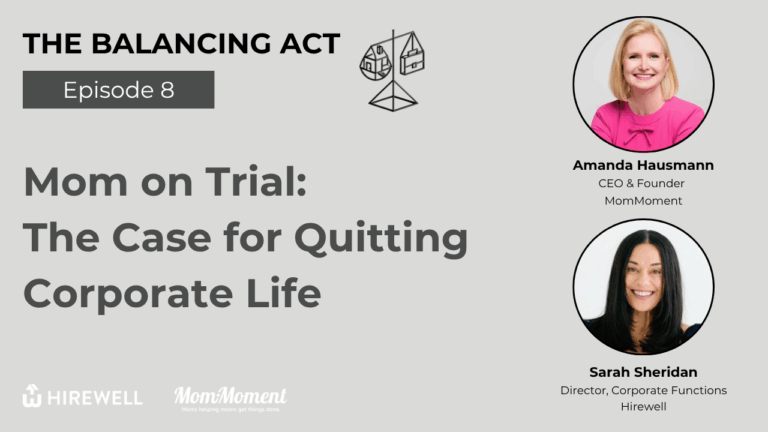
Sarah Sheridan sat down with Amanda Hausmann, a former attorney who hit her limit juggling work and motherhood — and turned her burnout into a business that helps other moms do less.
They talk about the meltdown that changed everything, the app she built to connect overwhelmed parents with practical support, and the everyday tools that helped her stop reacting and start living.
Whether you’re scaling a business, a household, or both — this one’s for you.
Episode 8