


CHICAGO, Sept. 23, 2026 /PRNewswire/ -- Hirewell, a global talent acquisition partner, today officially announced it has acquired Gateway Essentials, an executive search firm specializing in the government contracting industry. The acquisition ...

Innovators in the recruiting space since 2001.
Our sister company. Helping people become better job seekers.
Visit Hirewell.com
Episode Highlights


Subscribe to the Talent Insights podcast on Apple Podcasts, Google Podcasts, (recommended for Android users), Amazon Music, or Spotify. Watch us on YouTube—and don’t forget to rate us!
Hiring demand is back. But the playbook changed.
Companies still need talent. They just don’t want to overhire, lay people off, and do it all over again.
So what are they doing instead?
In this episode of Stacked, we break down:
- The real reason RPO demand is gaining serious momentum again
- When to build internal TA vs bring in outside help
- Why AI is flooding pipelines with more noise, not better candidates
- How to actually build a hiring strategy that flexes with your business
If your hiring plans for 2026 feel uncertain, start here.
Episode Transcript
Alright, we are back with Stacked Tech Hiring Insights. We have a great show where we’re talking about everything hiring, and all the trends that are going on right now. And today we’ve got an exciting show. We are catching up with a couple of my partners, esteemed colleagues, where we are going to discuss, the unbelievable rise in demand for RPOs and internal talent.
And what’s driving that, why, and, how Hirewell can help solve those problems. So, let me make introductions first to Jeff Smith and Rosanna Snediker. I will hand over the mic to Jeff to start and tell us a little bit about who you are. Yeah. I love, first and foremost, the fact that I get to participate now in a
technology focused, podcast, content, whatever we’re doing here, it brings me back to the old days of focusing on software engineers. So [00:01:00] here we go. I’m a partner here at Hirewell, I am best known as kind of like our solutions architect for, the best way to put it. And all that means is
listening to what a customer opportunity is and kind of crafting a solution around that particular place in time. So really excited to talk to you about what’s going on in RPO Land. Nice. I’ll jump in. Thanks Mark for having me. Same as Jeff. I am getting back to my tech roots being on here. It’s been over a decade, but, love to jump in.
So also a partner here I am on our corporate functions team. I run that practice, which is more of our talent acquisition practice. So we essentially recruit our recruiters. So we’re talking to a lot of our HR and talent acquisition professionals just about building out their internal teams, whether that’s contract recruiters, whether that is, if they’re looking to bring on an RPO solution where we typically tap on Jeff to have him come in and help solution that out.[00:02:00]
Or if they are looking to, expand their team from a full-time standpoint and help them identify full-time hires. So happy to be here and excited to talk about the uptick we are seeing on the internal TA market. Awesome. Awesome. Well. I think the understatement is that the market is evolving very rapidly, right?
of the century, literally. You know, so many of the things that we see though are somewhat cyclical, right? We’ve seen them before. At least components of them, maybe in different levels, right? But there are some key things that are happening right now and, with the demand that we’re seeing, we thought, let’s get together, let’s talk about it.
So Jeff, maybe I’ll let you start, and one, let’s define what RPO means for those that don’t. Right. And let’s just talk a little bit about what you’re seeing in the market, why the demand and sort of how we’re helping clients kind of, you know, solve those problems right now? Yeah. [00:03:00] RPO means recruitment process outsourcing.
It’s basically the same thing as when every company calls something a project manager. It means something vastly different to every company. All we’re trying to do, when we think about this term is, deliver a talent program that fits, like I said before, that time and place. Traditionally it could involve, you know, larger, high volume sorts of engagements that run through potentially a vendor managed provider, something like that.
We tend to look at it a little bit differently and just say like, Hey, let’s talk about your current opportunity and let’s solve for that. I think that, you know, the market is, it just as it kind of did in like late 20, early 21 all the way into early 22 is starving again for solid recruiting talent.
But it’s different this time because of, I think some of the stuff that you’re gonna bring up later. [00:04:00] AI has a lot to do with it. I think maybe something that’ll resonate with some folks that are managing some of these pipelines is the age of the fake candidate, the age of, candidates being able to apply and mass apply to multiple different opportunities.
And, you know, the role of the recruiter has become not only to do their traditional work in sourcing, vetting, getting candidates that are qualified and doing that matchmaking process, but also just administering a process that has become much more cumbersome. That’s been my biggest realization on the market.
I don’t know, Ro have you seen the same. Yeah, those are definitely things we’re hearing. I think also internal TA has learned from the mistakes of the past five to six years of just over hiring, having to lay off, you know, we saw the 2021 of companies hiring these mass recruiting teams, and then two years later [00:05:00] having to let go of a ton of those teams.
So they’re just looking at things a bit different as they’re now seeing spikes in hiring. So a combination of all that they’re coming to us and saying like, what are smarter solutions? Because we’ve got technology looking a little bit differently, but we’re also, you know, not wanting to have to go through that at the extent that we did three years ago.
So there’s a lot that plays into it. Yeah. So tell me, a client comes to either one of you and says, Hey, here’s our hiring plans for 2026. When do we advise, you know, a customize RPO solution and when do we advise? Well, let’s help build out your internal TA team a little bit more. Can you talk about how we kind of work through that process?
Yeah, absolutely. I mean, the first question is,it’s a question of appetite. As external vendors, I think we recognize that not [00:06:00] every company is going to want to outsource this function. and that’s fine. there’s certainly many examples of best in class recruiting processes that are run internally.
And frankly, some of those processes are the ones that are emulated across multiple different, everyone talks about Google’s recruiting process. The reason is because it’s pretty slick. Is it applicable to every single scenario? No, but it is a best in class process. I kind of start and say, your example is perfect.
We’re talking about a year, right? We have a runway of a year. Are we gonna be in run and maintain after that? Okay. If the answer’s yes. What are you gonna do with those resources that you’re gonna potentially hire full time? Let’s talk about a plug and play solution that allows us to kind of come in, do the job with
with folks that are vetted and have done trusted work with us. By the way, I think that’s like really the key differentiator [00:07:00] between an RPO and, you know, kind of the service that RO provides is that’s the delineation. It does cost more. But you do get a resource that has been in the Hirewell marketplace, in our ecosystem that understands our process and methodology.
The point is to get in. Do the job and get out. I know you guys all roll your eyes when I say the faucet on faucet off analogy, but it is applicable for that reason. I think that the other use case, and this is where I’ll hand off to Rosanna, is, and I see this a lot with the interim and when I start to pivot it towards to, hey, maybe a contract resource or a contract to higher resource makes sense.
Is when there’s a more onsite, you know, application where somebody needs to be kind of in office and we don’t have that reach. So is that on par Ro? Yeah. Yeah, a hundred percent. I mean, if the onsite piece is there, if they’re wanting people to have face time with the hiring managers, do those, you know, onsite touchpoint when they have candidates come on site, you know they need to go.
More [00:08:00] internal. Also, like Jeff said, the cost component. I mean, that’s why Jeff and I do a lot of these meetings together because we wanna see what budget looks like. Because typically the contract route is going to be a cheaper option, but. That is sometimes you get what you pay for depending on, you know, what you’re looking at.
but like Jeff said, originally, RPO I think sometimes is associated with like high volume recruiting. That’s not always the case. Like we have RPOs going right now, even that are part-time, like ours are so customizable where we have folks doing part-time assignments where they’re allocating 20 hours
to a client a week. so there’s just a lot of flexible solutions right now that our team’s able to provide. So I think that’s really where there’s been an appetite too over the past year that we can really customize to clients depending on where the bandwidth is for our team right now, which has been really exciting, for clients to dip into where they haven’t been able to do over the past few years.
Yeah. When I hear things like, so tell me, Mr. Or Mrs. [00:09:00] Client, how’s your funnel? Are you filling a lot of these jobs that you know with inbound applicants? Are you needing to leverage other resources? External recruiters, head hunters, and they say no. It feels like a nice use case for a contract recruiter, right?
They’re adjudicating the individuals that are coming to them. Those are warm leads. They’re getting ingratiated with the client, within the ecosystem of the company. And they’re kind of getting from point A to point B without having to do a lot of sourcing or manual headhunting.
Where our RPO really flexes is that, those individuals are backed by, you know, the 70 plus recruiters that we also employ. So again, these are all like the little things that both Rosan and I are listening to and we’re trying to decide which one of these routes is the right way to go. Now, do you ever put an RPO in place when our client actually has like a TA infrastructure already?
You know, like [00:10:00] when does that make sense versus. Just adding, you know, completely taking it over. Right. Like I feel like there’s a few different scenarios in this RPO, you know, that we kind of fall into. Yeah. We see it most often in the kind of seed through pre-IPO space where, you know, we’ve got some semblance of an HR structure.
Maybe there’s a strategic lead, and a recruiter or two. But then there’s some funding and a mandate to kind of grow rapidly. These are the instances where the RPO like really, really is a rocket ship to help push that growth. And it also allows, again, for us to like turn the dial down when the work is done and say, here.
Here’s your program back. That’s the best to use case. The other places we’ve seen it, if you wanna talk a little bit larger, is divestitures integrations. M&A, you know, for lack of a better word, where maybe you [00:11:00] divest from a shared services arrangement and you need to kind of stand up individual competencies in technology or finance.
Those are big lifts, and they don’t stick around forever, but they require kind of some horsepower for a very finite amount of time. I like the RPO in those instances too. Yeah. And that first example we’ve done where the RPO comes in and then when we’re on our way out, we’ll help them hire their first recruiter.
Sure. And then that first recruiter will be the, you know, the person that sticks and stays as that full-time employee that can help them build out their TA process or pick up kind of where we left off. And then do we stay engaged with them on just still kind of an outside agency partnership moving forward.
Yeah, yeah. I mean that’s the goal is that then, you know, we’ve placed that person, we’ve got the relationship, and then when they do need help from outside hiring, we’re their partner of choice to help them build out other practice areas or hiring that they need. Gotcha. Gotcha. Yeah. So being able to build a customized [00:12:00] solution, having a great experience through the process, right.
And being able to kind of build that long-term strategy. I know, one thing that I’ve seen is just how valuable this model can be when we’re working with private equity partners and then their portco’s, so they get the same experience, more or less. You gotta customize it for the business and culture and everything else.
You know, they can kind of run this over and over again and they know what they’re getting with us. And those have been some great partnerships on the Hirewell side of things lately. Right. Yeah, I think it’s a great point, mark. As soon as we have, we have a lot of private equity partners and once we’ve demonstrated the value of what our process brings to the table, it allows for that
equity partner to talk to their portfolio companies about their experience with us. And it takes, you know, it takes the salesmanship off a little bit. It’s kind of this unified front from the investment person and us going [00:13:00] to the portfolio company and saying like, we can do it different. Because we talk to a lot of, you know, early series founders who unfortunately get burned by the standard contingent, model. And having that backing of, you know, the talent partners within the investment house is really powerful and kind of gets everything started in the right direction. Awesome. Awesome. Well, I think we are, we’re hitting up on time here and we’d like to keep this, keep this tight.
So, any closing points from either of you before, you know, we drop into kind of how to reach out to us. I’d say for me the biggest, I guess takeaway is right now, this is the most internal TA we’ve had on the team in probably the past three years. So when you look at Hirewell just know that we can deliver in all ways.
If you need a contract recruiter, if you need someone internal, we can help you find that permanent solution. If you wanna talk RPO. We will talk that Jeff and I love to do meetings together to help you figure out what that best [00:14:00] solution is, and that solution can change too. A lot of times clients come to us and like Jeff said, that faucet can turn on and off, and also that solution can look different depending on how your business ebbs and flows.
So yeah, that’s my closing point. Yeah, and it wouldn’t be a, a chat, about talent and hiring if we didn’t talk about AI for 30 seconds. And I think it, you know, I see a lot of, talk and chatter about, and I think we’re seeing it happen real time, that AI was gonna displace recruiters and it was going to make things more efficient and better.
And I think some or a lot of that will actually come to fruition. But just like any other application with AI, it’s only as good as the user that is using it to enhance their process. I kind of go back to that first comment of there’s more applicants than ever.
There’s more noise than ever. And do you have a partner or a recruiter or an internal competency that understands that market? That’s what [00:15:00] I would key into, versus just the blanket, automation’s gonna solve everything. Because what we’ve seen is that it certainly made it more complicated. It’s been the, it’s been the exact opposite.
Yeah. Awesome. Well, Rosanna, you are the expert on everything, HR and internal TA and, if anybody wants to meet with us and join, they’ll get to listen to Jeff talk about how he has sat in their seat before and run internal TA as well, never to be missed on any meetings. So, if anyone wants to reach out and discuss, you can hit any of us at our first names@hirewell.com.
Pretty easy. Clearly we haven’t changed jobs in a long time. So, thank you for joining. As always, great to see you all. And that is it for Stacked. Bye guys. Bye. Thanks for having us, mark. Thanks Mark. You got it. Bye. Bye guys.
More from Talent Insights
In this episode of Stacked, Mark sits down with Phil Muldoon to talk about how Hirewell is helping private equity firms and their...
Industrial hiring is a different animal. In this episode, Charlie Saffro, Jeff Smith, and Shannon DiBenedetto dig into what companies get wrong when...
AI is changing tech hiring, but the job titles are still catching up. AI engineer. AI agent engineer. Machine learning engineer. Data scientist....
AI isn’t just changing how companies build. It’s changing who gets hired. We’re seeing a spike in fake candidates, AI-polished résumés, and hiring...
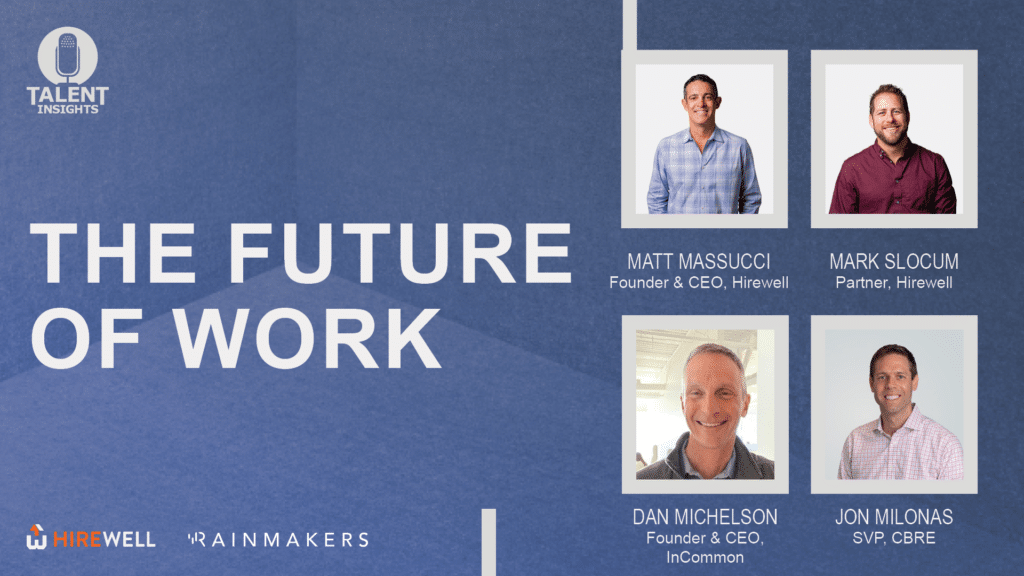
In this episode of Talent Insights, Hirewell CEO, Matt Massucci discusses “The Future of Work” with experts Jon Milonas, SVP at CBRE, Dan Michelson,...
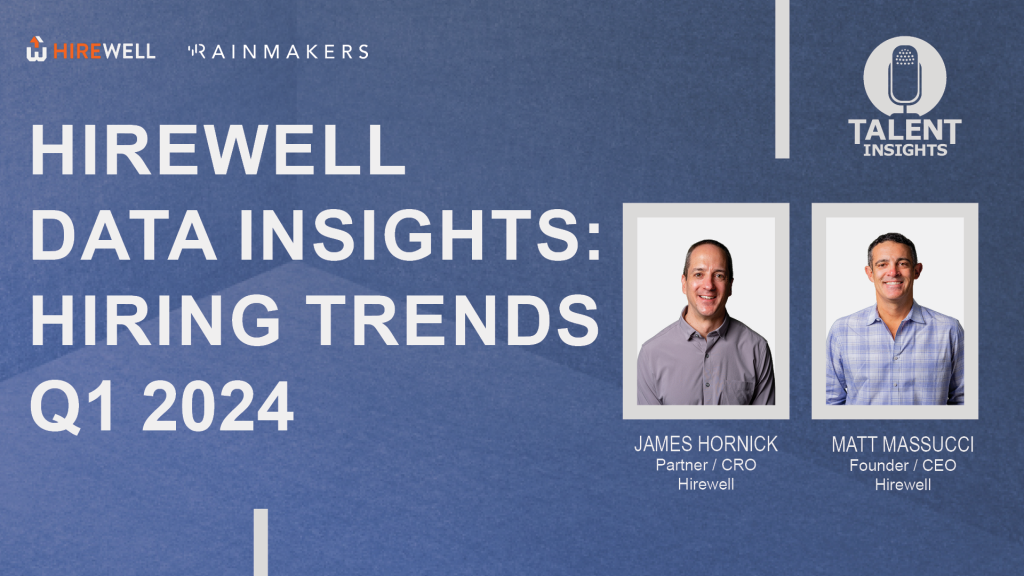
New year. New hiring market. Hopefully. 2023 was a year a lot of recruiters are happy to turn the page on. But it...
Our Shows











Our Latest Blog
No results found.
More from Our Blog
No results found.