
Everyone says they use AI now.
But there is a big difference between using AI and actually knowing how to apply it to your job.
For go-to-market hiring, simply having ChatGPT, Claude, or another AI tool in your workflow tells an employer ...

Innovators in the recruiting space since 2001.
Our sister company. Helping people become better job seekers.
Visit Hirewell.com
Episode Highlights


Subscribe to the Talent Insights podcast on Apple Podcasts, Google Podcasts, (recommended for Android users), Amazon Music, or Spotify. Watch us on YouTube—and don’t forget to rate us!
In this episode of The Balancing Act, Ashley McCray-Ford gets real about:
- The identity shift that hit hard after maternity leave
- Why grieving her “old self” helped her thrive as a mom and a leader
- What it was like to pause Harvard Business School to care for her dying father and why she’d do it again
- The surprising power of therapy, choice, and giving yourself grace
- How she’s helping others reclaim joy and direction through her company, CHOOZ
Ashley’s story is raw, grounded, and refreshingly practical. If you’ve ever felt like the version of success you were chasing no longer fits, this one’s for you.
Tune in to learn more.
Episode Transcript
[00:00:00] Hello and welcome to The Balancing Act. I’m your host, Sarah Sheridan, mom to three little ones and director of sales and recruiting at Hirewell, for today’s show, I’m super excited to welcome our guest, Ashley McCray – Ford. Ashley has a little one at home and super impressive educational background and even more impressive professional experience.
Ashley, welcome to the show. Thank you. Thank you. Thank you so much for having me. I am honored to be here and I’m excited to have the conversation. Yay. Well, super excited to have you. So lots I wanna go over, so that’s just kind of kick things off. Share a little bit more just about yourself when it kind of comes to career path and then family.
Amazing. Well, I will mimic your intro. Hello everyone. My name is Ashley McCray – Ford, and I am the proud mommy of one human baby and one fur baby, happily married, and [00:01:00] I lead international strategy. And I’m the senior manager of business operations for Lumi deodorant. If you’ve never heard of Lumi deodorant, I highly recommend you change that.
It’s the preeminent whole body deodorant. You can use it everywhere, and I promise you, you are welcome in advance. So before where I am currently taking you all the way back of who I am and what my career trajectory is, my background, I’m born and raised in Chicago. I am the youngest of seven. I start all the way back there because it explains my personality.
Yeah. It usually does. Birth order has a lot to do with it. Even though I’m told I give older sibling energy. I am just blessed to have fantastic older siblings. That really created a great model and a framework for me to see what I want to do in life. I received my chemical engineering degree and I started my career on the technical side of the industries, so oil and gas.
And I ended up pivoting into consumer product goods, specifically working at General [00:02:00] Mills for five years. I, after being there for five years, decided to pursue my MBA. I went to Harvard Business School where I spent a lot of time. Digging deep into startup land and uncovering my love of strategy, and that led me to management consulting at Bain and Company after graduating, and then I was at Bain and Company had my first child while being a management consultant.
Happy to talk about that whirlwind of an experience. And then Lumi came calling and it was serendipitous of bringing me back to CPG with my love of strategy. My love of ambiguous spaces and how to make every single individual’s life better with a consumer product. So that’s where we are now, and there’s tons of other side quests along the way.
I think the consistent through line from my career is how I am making people’s lives better by the work that I do, and that is through and through what I care about most. So that’s me [00:03:00] professionally, me, non-professionally. I love RuPaul’s Drag Race. I could write a thesis on why I think it’s a human love letter to humanity.
I love pizza. That’s the Chicago in me. Okay. And I love deep conversations with strangers. So that is me. I love it. And one thing I love about your background, it’s just, I mean, there’s so much variety. I think it’s so interesting to talk to people who have an education, which is different from their first corporate position, and you’ve even pivoted after that.
So. Fascinating. And you know, kind of piggybacking, like, can we talk about maybe some of one or two big inflection points that really you think shaped you as a leader and then also as a mom. Ooh, yes. I would say three inflection points in my career would be one, living, working, and researching in Tanzania.
At the start of my career, I did that as a junior in college. I was [00:04:00] still pre-med at the time, and by living in rural Tanzania for a few months. I realized my passion for helping people was less aligned with actual medicine and more aligned with like food security and providing basic essentials and rights to all people.
So I came back to the US to look for a company that did just that, and I found a nonprofit called Partners in Food Solutions, which was created and run through General Mills. So I had never really thought I was going to become an R&D product development engineer, but because I wanted to be involved in this nonprofit, I had to work at the company to try.
So I applied to General Mills, and that started this pathway that led to the bio I kicked off. Without being at General Mills, I would not have been engaged with so many fantastic humans who had their MBA, which planted the seed of maybe I should go to business school. Second, huge. Inflection point was getting my MBA at Harvard Business School.
[00:05:00] I think coming from a technical background, I always ask why. That’s just who I am. And to be in a place that not only answered that why, but also gave you the resources to go out and change the world and be the change you wish to see. I left feeling limitless. And then the third inflection point was being a management consultant.
Coming back from maternity leave into the real world of working. Woo. Right up until that point, Hey, it gets you every time, every week, every time. Oh my goodness. The fact that you have done it three times, I am like sending you like, I’m in awe because, but I don’t have like a success script for it, you know?
I’m just like, I did it. I dunno if I did it well, but it was done. Faith is a jarring experience, especially up until that point, as I mentioned, I felt limitless. I really felt like anything I could set my [00:06:00] mind to, not to say, like I’ve definitely. Tasted a lot of failure and have fallen on my face before, but putting the time in and getting back up always was enough to still get back to that level of excellence I was accustomed to as opposed to coming back from maternity leave.
I’m like, oh my goodness, there’s not enough hours in the day. Like there. There literally it was a mindset shift and it was really part of me as a person had to grieve the person I was previously in order to embrace who I am now and like in order to thrive and be excellent in my career, and be an excellent mom and be an excellent wife, and being able to balance those and accepting, sometimes you drop balls and that’s okay.
And the importance of what skills then had to rise to the top that I may not have needed nearly as much when it was just me as an individual contributor, not just professionally, but also personally. So I would say those are the three big inflection points, and they all really laid the [00:07:00] foundation of.
Tanzania helped me ensure that whatever I did professionally aligned with my values because my why statement needed to, needed to make sense.
Working and getting my MBA was like, you can do anything. And then becoming a mom and working like, yes, you can do anything but everything you set your mind to,
you also have to acknowledge the fullness and the trade offs, what that means, and just looking at problems differently and leaning on help and support in a way I hadn’t had to do in the past. I love it. I think it’s spot on. It’s like a mindset shift. It’s, you know, it doesn’t matter even if you went to Harvard Business School, I think it’s just a new identity, a new timeline.
It’s almost like sometimes you feel like. Everyone else gets to start the race two laps ahead. And then you have to figure out like how to start. And then also like get there, 1000%. And in that same metaphor of like, you, we are starting the race maybe two laps behind, but because we have this added skillset and this new superpower that is motherhood.
Yeah. Now we’re seeing the [00:08:00] track totally different. Now it’s like, okay, you never said we couldn’t like cut across the track, or maybe there’s this added mechanism to go faster. Now I, I am running with a stroller, you know, I’m going on this side. It’s an interesting, I always joke, I’m part of the biggest invisible club there is of parenthood, and by leaning and asking so many questions, I’m getting all of these life hacks I never knew existed.
Yeah. And that has definitely informed how I show up as a mom, but more importantly, how I show up as a leader because you never know what’s going on in your teammates, your colleagues’ lives, where it’s like, I just came from picking up poop bare handed while being on a conference call. You know, like it’s someone else’s caretaking for their parents or someone may have lost someone.
Someone may have been looking to become a parent and the worst possible thing happened has happened and they’re still showing up and trying to get their job done.
And because I know firsthand how, how jarring it can [00:09:00] be to try your absolute hardest and it still not be enough as a like working mom, it’s made me that much more of an empathetic leader and how I can go up at work every single day.
Yeah. No, I love that so much. And I did, you know, when you mentioned even this podcast has only kind of focused on caretaking for little ones, babies, toddlers, but you brought up a really great point. Like caretaking doesn’t just mean as to little ones who you have to deal with poopy diapers, although that’s a lot of us, but also for aging parents, for sick relatives.
Like that’s, that’s another huge aspect of where you have a whole nother set of responsibilities and a whole nother job per se. So would love to, you know, I know that, your dad did get a terminal diagnosis and that really played a major role in changing. Your path. So if you can kind of share a little bit more about how that played out and kind of got you to where you are today
even? Happy to, I [00:10:00] mentioned that my career pivot in Tanzania really helped me know that values are important not only in how I live day to day, but how I practice my career. And one of my core values have has always been family. And when I was in my second year at HBS, my father was diagnosed with a terminal cancer diagnosis.
It was stage four pancreatic cancer. And typically the prognosis for that is, they gave him like two weeks. So it was a very quick turnaround of what they thought, his time left with us was going to be, and that forced me to have, to make a decision of living that value in true form. Where am I going to try to do both?
Which I did in the beginning of going back and forth between Cambridge and Chicago to be with my family and to complete this degree, or do I make a choice And I ultimately made the choice to defer that semester of school [00:11:00] to go and be present with my family and I, the hope was to get as much time with my dad as possible and to help my mom put different systems in place and just really be the stabilizing factor that they have always been for me and for us.
And fast forward the happy ending of the story, we ended up having like four years instead of like two weeks. So the prognosis it, my dad was a medical anomaly, but it definitely shifted a lot of things for me in terms of saying family was a top priority, but up until that point, I wasn’t tested of what that meant and Right, like foregoing.
I’m also super grateful, eternally for my professors and the institution and my friends who provided counsel. That I asked like, Hey, I’ve never heard this being done before. Like, can I really defer? And they said, that doesn’t matter nearly as much as the time with your fam, your father, and you’ll never get that back.
And [00:12:00] that to me, going back to my last point of like empathy as a leader has stuck with me and there are tons of moments where I have to choose and like decide do I want to like live in those core values as I work? But my dad being sick and me taking that leap of faith, of spending that time with him, 1000% was totally worth it.
We were watching FBI and CSI, all of his shows together. I was able to like ask the questions and have closure and understand who he was beyond my father. But like as Eugene McCrae, I was able to be with my siblings and while they didn’t have the same flexibility because they were still working their full-time jobs.
I was able to kind of like be a point of continuity of bringing them in and they came in with their own respective skillsets. And while being home created this foundation, that made it so much easier for all of us to have to [00:13:00] navigate a tough, a tough time. So my dad did end up passing this year and
grief is real, comes in waves, but I think I am really at peace and when he passed, I was a lot more at peace because I had that time when we thought it was in two weeks to get as much closure that I needed to ask the questions to record his stories to my future children to like write down. I get our family history to like our parents got their wills together, their estate planning documents, like all these
things I asked him what his preferences were, when it was time for him to pass, what did he want done, who did he want to be there? All of these, these pieces of information, everyone isn’t lucky to get. I was able to get that. So then when he did transcend, we as a family were able to focus in on like
each other and support and celebrating the life that he lived. And that came directly from having to make that choice. And if anyone’s listening to this, who’s going through it, I am [00:14:00] here. I’m happy to be a resource because talking to other folks whose parents passed was a huge support to me and bringing it all back to, as a mother, like I, I hope to provide that same level of stability and clarity for my own children when it is my time to pass, because it does make a huge difference.
Well, thank you for sharing that because again, I, we touched heavily on maternity leave coming back from that, but I think a lot of people in the audience I know at my company are going through that, that other season of life where you are caring for your parents and. Probably, you know, one of the hardest moments of your life and I think you showing up and just being authentic and open and honest and you were, you know, people are like, of course, that’s what’s most important.
But I think that’s like such an important thing to share. So again, so appreciate that. Thank you. And then I think even going off of that, like in your life you’ve been a rock, like, you know, you’ve been a rock to, during that, prognosis, you kind of kept your [00:15:00] family together, all seven of you, and then being a mom, you know, like you’re kind of, people are, or depending on you.
So how did you find the experience of like when you had to ask for help? At home, at work, like, I think sometimes women and moms especially, you feel like we have to take on this like superhero persona and it can be super hard, but like what was your experience and kind of like your approach to that?
Oh, that’s a great question. I’ve always been pleasantly surprised at how helpful and generous everyone around me is as soon as I ask for help. And I am blessed with a fantastic partner and exceptional friends who I don’t even need to ask. Like going back to my father, I had a friend who lived in Chicago and I let them know like, Hey, as the day,
the day I came home, the next day they had come down and like were with my mom while I was at the hospital. They were putting, putting up a printer for her and like they brought her food and like she was tearing up that fish. And it was just like, I [00:16:00] didn’t have to say anything other than like, Hey, this is what’s going on.
And they showed up and they made her that. The details were taken care of. Or as a parent, especially when navigating that, that stretching season of coming back from maternity leave, my, my partner and my husband really stepped in and was like, Hey babe, you focus on work. I will drop off. I will pick up, I will make sure like food is done.
I will do laundry. Like all you need to do is like focus on like work and getting back your bearings. Like you, this is what matters most. Like you are what matters most to me and I would say like therapy has also been a huge resource for someone, our superhero women, that it’s hard for us to ask for help initially, like having an hour dedicated biweekly for me just to share stream of consciousness makes it easier for me to know what exactly,
what type of help I do need, like what type of help exists as opposed to feeling like we need to [00:17:00] do it all by ourself, because that’s what has led us to success. Success up until this point. And to answer your question directly. How I ask for help is I will now let my support circle know. It’s like, hey, this is how I’m feeling and this is what would help me.
What are your thoughts? What’s your advice? And leaving it wide open and the typical response is five to 10 different options. I had no idea were on the table and I am super appreciative of that, and I think. One of my favorite questions I ask as I have conversations with amazing humans fairly often is, this has been super helpful.
What’s one way I can help you? And by leading with helping with others, it makes it that much easier for me to ask for help later. For sure. Yeah. I love that. Love it. And I like, it’s interesting, like you, when you brought up therapy, ’cause I’ve had well over 25 interviews with kind of like the executive [00:18:00] females raising little ones and.
At least five brought up that being like they were at complete burnout. They were at a low point and like they were like, that was my inflection point, like taking whatever time aside, one hour a week, whatever it was. That’s like what gave me the clarity. That’s just kind of like a reset. So I feel like that I’m glad people are leaning in and it’s not seen as like a weakness, but if you have so much going on, you need some kind of, like, even if it’s an out 10 minutes, there has to be some moment where you kind of have like can get that clarity.
So I love that you brought that up. Yeah.
1000% my therapy, like now is the time moment came from actually like a peak where I, it was 2019. I was the youngest woman named to the top 50 women in business list in Minneapolis, St. Paul. And Huge accomplishment. Yeah. But I still was like, going after more.
[00:19:00] I was like, okay, that’s not enough. I’m just going, going, going. And that was my like, aha moment. Like some things like I, I need clarity because I am driving myself to the point of burnout. I’m achieving these different milestones, but I’m not actually appreciating them at all. Like I’m not taking a moment to look out at the summit and be like, wow, what a blessing.
How do we appreciate this? It’s just like onto the next thing.
And there’s always going to be more if you’re not clear on what matters most to you. And I had lost what mattered most to me. As I was on this, like this climb in terms of success and like therapy really helped me like l learn to reconnect with my feelings, learn to reconnect to like what my body is saying.
And I think that’s super key for us as working moms. And I think. It’s very easy to go into superhero mode where you just focus on the task that needs to be done and deprioritize how you are. Like, what do you like? What do you need? Because [00:20:00] it feels like that doesn’t matter, but it really does, right?
Because if we like, we’re mimicking to our children. What exactly. Self care. Right, right. It’s huge. They watch every, yeah. Huge. I totally agree with that 100%. So I agree 1000%. The therapy’s fantastic. I think of it as preventative medicine. I also am a big proponent of couples therapy. Like preventative medicine would rather do these things before you have to.
Yeah. And as the calendars continue to get busy, having a dedicated time block to really focus in on like, how are you, how is your relationship, how is the things that matter most to you? With an unbiased person, best hack as an adult? I love it. Yeah. Take notes everyone. Well, so speaking of like your many accomplishments, I think one huge one is also starting your own company,
CHOOZ. So tell us more about that. We’ve talked about your management consulting current position, but what is CHOOZ, [00:21:00] you know, what problem were you trying to solve and tell us about like when you created it. Yeah, so CHOOZ is really focused on providing the power of choice back to women of color is the focus.
But it really started from high achievers who are kind of, as I described, like constantly striving, constantly going, but you lost connection, like what do I care about? What is happiness? What is contentment, what is fulfillment? And that chase for more can lead to your downfall. It also leads to chronic illnesses where it’s like, 75% of individuals do not feel satisfied with their current life, and that does not correlate with wealth.
That was like my impetus. But to take it a step back, I come from an entrepreneur, like my mom was an entrepreneur. I take for granted. Like the importance of small and medium sized business until I really think back to what we just talked about. What we see in our parents makes such a big difference.
So I started [00:22:00] my first business on accident while living in Minneapolis. I was doing pro bono consulting for small CPG brand. Of anyone who asked for help, I was like, of course I would love to help see you be successful. And I did that enough times that one person asked me what my rate was and I was like, great, I can charge for this.
And they were like, yes. And that led to me doing consulting for pay, where the state of Minnesota at one point was like my largest client. And that created this kind of domino effect of, wow, I can be compensated for doing the things that I love to do. And going into business school, it’s like, okay, I would love to do this full-time.
I would love to be an entrepreneur, a founder, and I want to focus on something that I care a lot about deeply. And for me, the power of choice is so instrumental [00:23:00] because life, as we talked about my dad, life is gonna life. There’s only things that are going to happen, but ultimately we do get to choose how we react to those situations.
We get to curate a life of happiness that is uniquely ours. But those aren’t necessarily like tools and tactics and the science behind it isn’t something that’s in the casual curriculum. So I spent like three years diving deeply into like happiness research, positive psychology, like interviewing experts.
I was featured in the Wall Street Journal. I became like the VP of Happiness at at Harvard. I love that. Where like I became fixated on what is, like, what’s the how of happiness? How does any individual increase their contentment with their life, and how do we systemize that and break it down into, I used to call it like the noom, which is like the health and wellness weight loss app. But for happiness with like every individual, there are very [00:24:00] specific tactics that anybody can apply in their life to increase their contentment, to increase their satisfaction with their current state, and help them leap to the next phase of whatever that is for their life. And it starts off with you deciding like what matters most to you.
So CHOOZ is that. CHOOZ is like the curriculum to help the individual understand like what matters most to them, what plan do you need to put in place to get to that? But more importantly, what support system, who are the three people in your life that are coming on this journey with you to support you, who, how, and what matters most?
And ultimately, really honing in on the power of choice. So that is CHOOZ. That’s the core, the ethos behind it all. While in business school, we focused on providing this tool to enterprises by leveraging the curriculum with their enterprises. It was a retention tool to help not only retain their top talent, but to help promote the talent they have to really fix that broken rung.
[00:25:00] And I can spend its own hour talking about, yeah, we, we have to do a follow up, or I just need to learn this. But the, the short end of it all is as well-Intentioned companies hire diverse talents of perspectives, age, race, gender, orientation. They do a really good job of bringing talent into the funnel, but we see the biggest drop of talent at that jump from individual contributor to manager.
So that’s the broken rung where it’s like broken right there. In terms of like getting to that next threshold, less than 4% of C-suite leaders are women of color. And if you look back where that drop happened, it’s at that middle rung of making the jump to manager. So leveraging chooses curriculum. We were helping enterprises
really fix their pipeline for talent. And where we are now with CHOOZ is we’re back to the individual. So we’re back to the individual because right now the job market is tough. Right now, [00:26:00] post Pandemic, we are still working as a society of getting back to what is happiness and belonging and connectedness looks like.
So we repositioned as a company to bring it back to the individual. Like what really matters most to you and how we can improve your overall satisfaction with the life you live and to be happy. So if anyone is hearing this and feels seen, feels understood, happily to set up a consultation, come through, join the CHOOZ cohorts, and we are happy to help you in whatever way possible.
So that is CHOOZ. I also am a co-founder of Honeypot Treats. It is a cannabis brand out of New York, and that is just simply a CPG brand based out of honey. So to your point, Stephanie, I am blessed to have a very varied, life and I call it a portfolio career, and that’s largely due because me, as an individual, I have a lot of different interests.
And I like to live the [00:27:00] thesis of CHOOZ of choosing to curate a life of joy, and based off of the things that I enjoy doing and the communities I want to curate, doing them together. So with people like yourself, like I feel like there’s always, you know, we’re just gonna call you a high achiever, call it what it is, but you’ve also like, very much like connected with yourself.
I think that’s where like the core, the burnout comes and you hear it from, again, I’ve interviewed so many like female execs with kids, it’s like, almost like it becomes not your choice anymore. So that’s why you see a huge drastic, high level women are leaving the workforce ’cause they feel like they just have lost control of their schedule, their time.
And like, I get it. Like I get where one could get there. So how do you, doing so many different things being a mom, like how do you manage that? Like if someone else is watching this and super inspired, what would be one or two like key takeaways? You know, once you’ve kind of done the CHOOZ, you’ve [00:28:00] identified what matters.
These are the three or four things I wanna focus on. Yeah. What has enabled you to do it and execute it? Well one, your team 1000%. You can’t do it by yourself. So choose, i’ve had co-founders with my other enterprise Honey Pot Treats. We are a small co-founding team. My home life, I have a super supportive partner.
We live 10 minutes away from my in Loves. We pay a pretty penny for daycare, but like the daycare community we have is the astronomically like fantastic. They’ve become, some of the teachers have become babysitters. So that investment into the team and the community is instrumental because help is the only way it works.
So you know that, and you can be as smart as you want, go to Harvard, but you need, you need support. You can’t, do you need support 1000%. You can go fast by yourself or you can go further with other people. And I would say the second thing is.
[00:29:00] I’ll give you three, two- boundaries, three- self grace. So like second with boundaries, I think no is something you have to get comfortable saying. And we hear this a lot externally that no is a full sentence on its own, but no, also sometimes needs to be pointed to yourself like no needs to very much be:
How do I keep my life as simple as possible? What can I do? What can’t I do in this current season? That doesn’t mean I can’t do it ever, but what do I have the capacity for right now? And if I have a dream, I have an aspiration to start a business, then what do I have the capacity for right now? And if you need help with that, I like to talk about like a two by two matrix of like time versus like importance where it’s like put the tasks or the ideas in this two by two matrix, like something that’s going to take a lot of time and have like low impact or and have high impact will be in that top quadrant.
It’s like, [00:30:00] okay, that is something that you may not have the capacity for right now, but let’s break it down to smaller chunks versus something that’s gonna take a low amount of time and have high impact. Then you can focus on that. Another thing to consider. Going back to my team point, if you are full of awesome human who don’t have capacity, there are virtual assistants, there’s AI tools, there are so many different resources to help get to the execution piece of whatever you want.
That’s why at CHOOZ and myself, we focus on the mental strategy of putting the plan together because there’s always gonna be a new tool out there to help you execute onset plan. And then that leads me to my third piece of advice is self grace is so important for us high achievers, because we are our hardest critics.
We know we are limitless and we are capable of everything. And when anything falls out of line of our expectations, it can be tough. On the flip side, it can be even overwhelming to [00:31:00] start because our definition of doing something is like it has to be perfect. So we spend so much time being meticulous with the details that it’s analysis paralysis or it’s too overwhelming to even jump into the deep end to try.
And for that, I would say. You are enough. You are great by you having the idea that is destined for you to try. But 80 20 is fine. That is one of my favorite takeaways from management consulting is 80 20. Yes. And what that means is like getting it to 80% is better than spending the extra time it takes to get it to a hundred percent perfection.
Because the reality is a management consultant example, I can spend let’s say two hours on this deck, it’s at 80%. I’m going to send it to the next person in the food chain. It’s going to come back with 50 11 notes and comments and stickers that need to be turned immediately. So if I would’ve spent an extra [00:32:00] two hours getting that original deck to a hundred percent, I actually missed out on those comments that came
that made it that much better. And what that means. Taking that metaphor back to your life as a woman who’s listening to this is having an idea or launching an initiative, or taking that one step plan, getting it to done 80%, and then bringing your team back in to get those perspectives to pass it on to the next person in the food chain is going to push you further down the line than feeling like you have to do everything by yourself because you know
it’s very quick for your little one to wanna run into the room. And now your your train of consciousness has been paused, so you’ve been working on getting it to a hundred percent, but now it’s paused at least until they’re down at bed. As opposed to getting it to 80, shipping it out to your team.
What are your thoughts? Come back when little ones in the bed and now it’s at a hundred percent when you flip it. So that was a very long answer to like simplify it down to what can you do [00:33:00] now is really focus on building your team. Who are the people around you who are not only gonna help you in terms of thought partners, breathing life into you in those hard moments and executing.
Two, making sure that you have boundaries, like what is in scope with the time that you have. And then three, giving yourself grace that nothing is supposed to be perfect, and that’s okay. Getting comfortable with it not being perfect and just being satisfied with the doneness is huge and to give a tactical piece of advice,
’cause that was very all big picture. Yeah, yeah. Write three things that you wanna get done a day. It’s like, especially if you are a founder or something, going back to these big goals, focusing on like one to three things that you can get done will help you make sure that you’re constantly moving towards whatever goal you set, as opposed to just focusing on the big goal and [00:34:00] then being sad with yourself that you haven’t achieved it each day.
But breaking that big goal down into bite-sized pieces and giving yourself a daily, what is one thing that I need to get done today to get towards that goal will help in the long run. I love it. Usually I end with takeaways, but I feel like this whole episode has been key takeaways, so I love it.
Well, Ashley, this was amazing. Honestly, I am, I’m so excited for people to get to listen, and you guys, if you have questions, reach out to Ashley on LinkedIn. You know, look at her company, CHOOZ. I think there’s so much to learn here. But thank you so much for your time. This was such a fun one to film with you.
And thank you all for listening and stay tuned for next time for more insights on building careers and raising families. Thank you. Thank you, thank you.I hope everyone has a wonderful kickoff to their fantastic [00:35:00] New Year. Yes, yes.
More from The Balancing Act
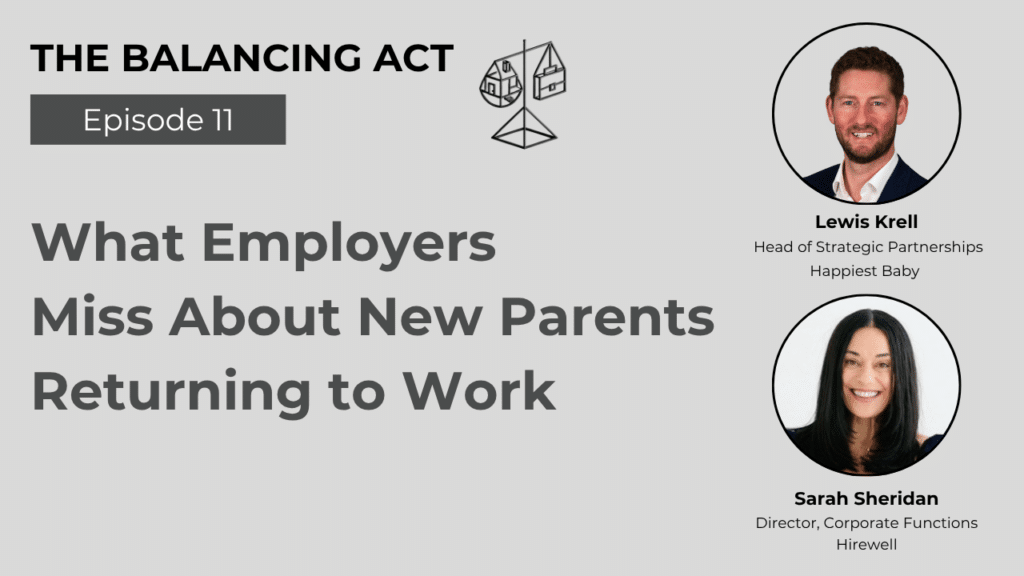
This week, Sarah Sheridan talks with Lewis Krell from Happiest Baby, the company behind SNOO, to talk about sleep deprivation, employee benefits, paternity...
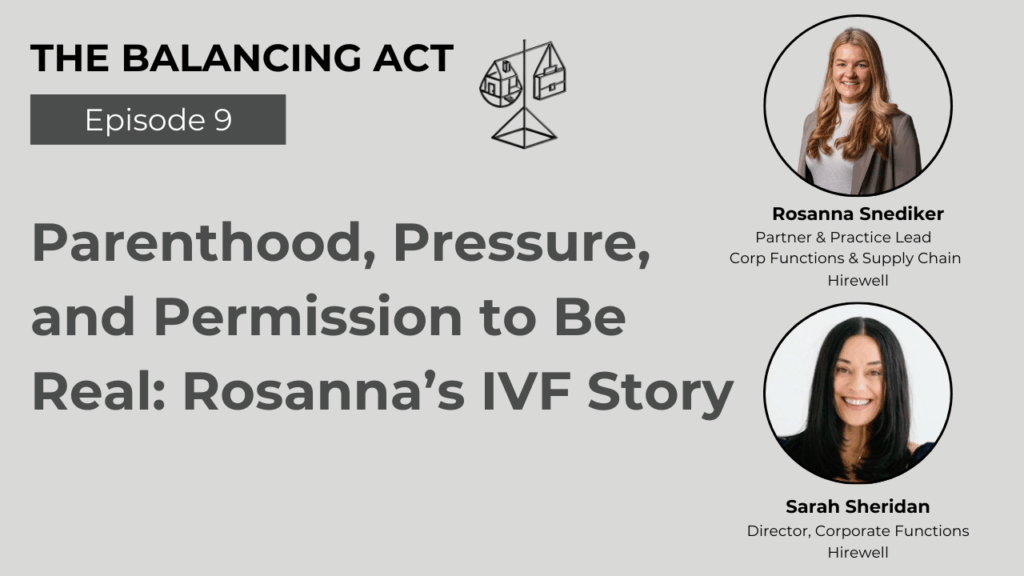
She froze her eggs at 31. She met her husband three months later. She didn’t tiptoe around IVF—she owned it, even at work....
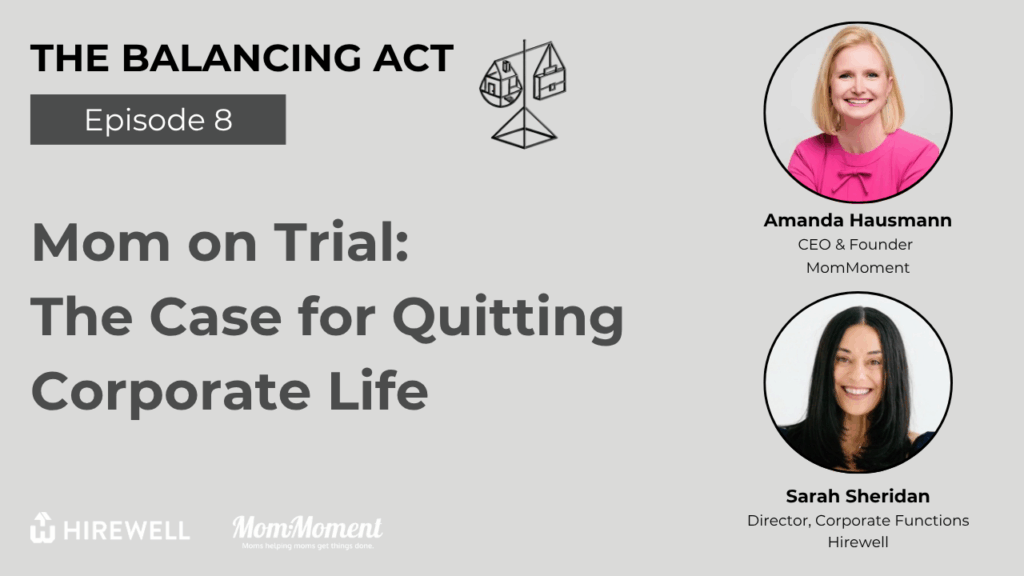
Sarah Sheridan sat down with Amanda Hausmann, a former attorney who hit her limit juggling work and motherhood — and turned her burnout...
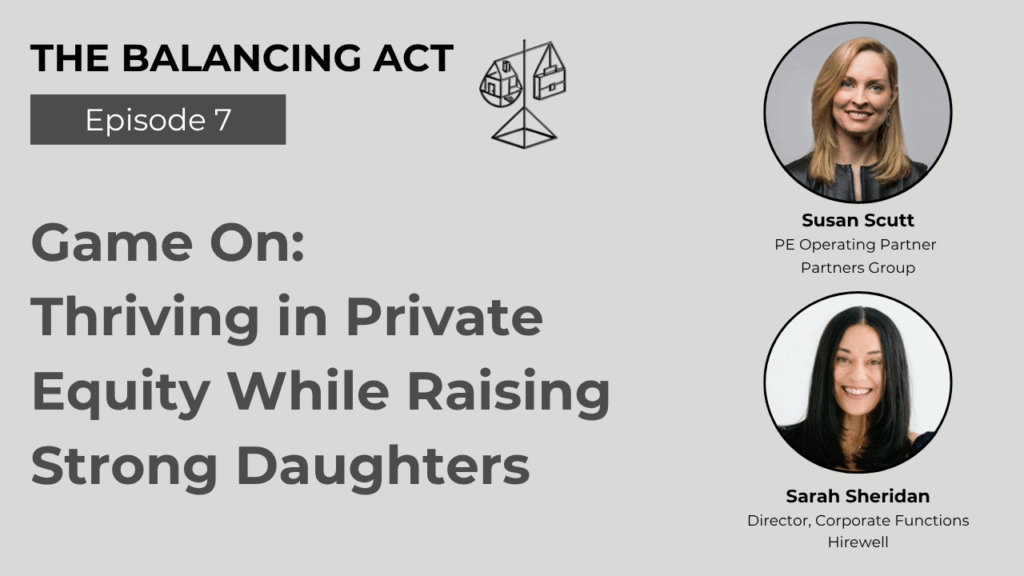
Six years off. One massive comeback. Zero regrets. In this episode of The Balancing Act, Sarah Sheridan sits down with Susan Scutt, private...
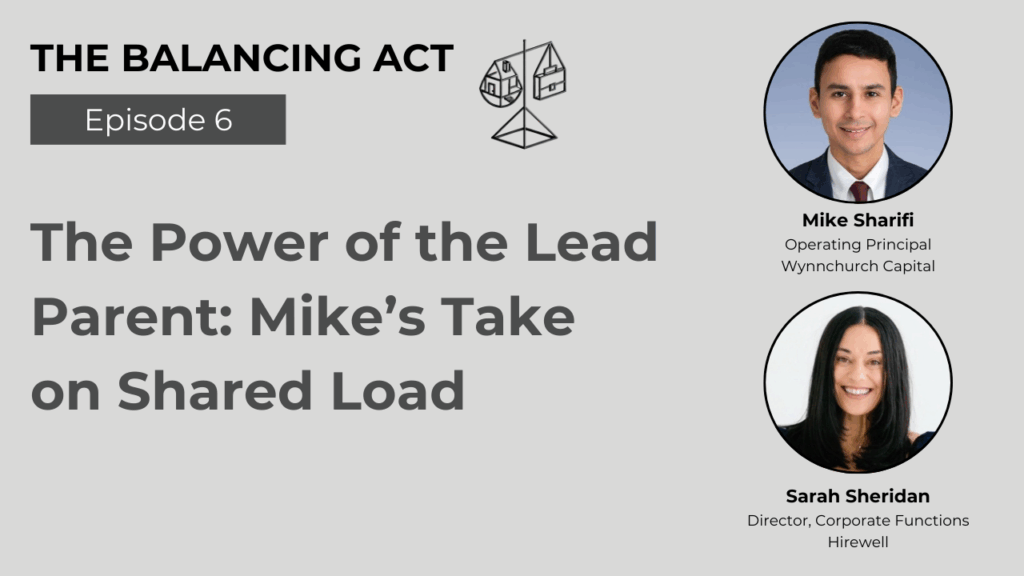
This week, Sarah Sheridan chats with Mike Sharifi, a private equity exec and dad of two, about what it really takes to show...
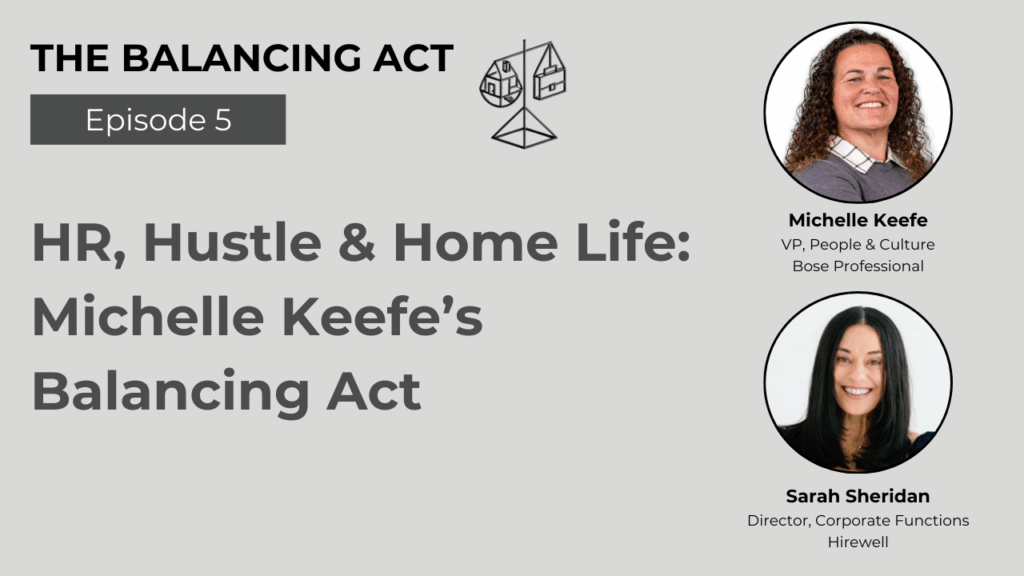
In this episode of The Balancing Act, host Sarah Sheridan sits down with Michelle Keefe, VP of HR at Bose Professional, to talk...
Our Shows


Our Latest Blog
No results found.
More from Our Blog
No results found.