
TL;DR: Companies are rebuilding sales teams with renewed demand for SDRs, BDRs, and RevOps talent to support pipeline growth and operational efficiency.
Entry-Level Sales Roles Are Back
We’re seeing a clear return of SDR and BDR ...

Innovators in the recruiting space since 2001.
Our sister company. Helping people become better job seekers.
Visit Hirewell.com
Episode Highlights


Subscribe to the Talent Insights podcast on Apple Podcasts, Google Podcasts, (recommended for Android users), Amazon Music, or Spotify. Watch us on YouTube—and don’t forget to rate us!
She froze her eggs at 31. She met her husband three months later. She didn’t tiptoe around IVF—she owned it, even at work.
In this episode of The Balancing Act, Rosanna gets real about:
- What egg freezing and IVF actually look like (physically and emotionally)
- Why she kept her appointments visible on her calendar—and how it changed her team culture
- What companies can do beyond maternity leave to actually support women
- How becoming a mom made her a more empathetic, grounded leader
This one’s not just for women considering IVF. It’s for every leader who wants to build a workplace that supports real life.
Episode Transcript
[00:00:00] Hello and welcome to The Balancing Act. I’m your host, Sarah Sheridan, director of Sales and recruiting at Hirewell and Mom to three little ones for today’s show. I am extra excited to welcome my manager and partner at Hirewell Rosanna. Rosanna welcomed baby girl earlier this year, and I can’t wait to have her join us.
[00:00:22] Ro, welcome. Thanks Sarah. I’m so excited to join. I love this podcast. Love listening to you. As you know, you’re my sounding board for all things Mom Hood here at Hirewell, so very excited to be here. Well, yay, so excited to have you and let’s kick things off. So, Ro, I know you’ve been at Hirewell a little over 10 years.
[00:00:44] Can you kind of walk us through your career journey and, and how you got here? Yeah, so similar to you, I have been an agency recruiter my entire career. I graduated in 2008 and became an agency recruiter and really haven’t looked back. I started in tech [00:01:00] recruiting and really did that for about seven years, and then made the transition over to Hirewell in 2015.
[00:01:06] So, like you said, I’ve been here a little over a decade now and joined our human resources practice at the time, which was only a few recruiters. Now we focus on all things corporate functions and we’re close to 20 people and have a great team. So it’s been a great 10 years I’ve seen the company and, you know, our team specifically grow a ton and really, you know, get to kind of do it all.
[00:01:27] Get to recruit, still work with clients, work with a great team, and people like yourself. So it’s been, a great journey so far. Love it. And Ro was the reason why I joined Hirewell, I must say. I love it. Awesome. And now to the fun part. Let’s pivot to family life. Yes. You recently ish, although time does fly, welcomed your first baby girl, Lily.
[00:01:52] So tell us some more about that. Yeah, so I welcomed a baby girl, in January of this year. Yes, Lily, [00:02:00] Lillian, but we call her Lily and she has just been the greatest joy of our lives. I mean, it has been so fun, but also so challenging at the same time. But went on maternity leave. Yeah, right at the beginning of the year.
[00:02:10] Came back in April and now have been in the working mom seat since April. Like I said earlier, I lean on Sarah a ton. I feel like our one-on-ones have turned into the first like five to. 15 minutes sometimes talking to all things kids. The one thing I did not know, parents, you know, each week it’s like something new.
[00:02:29] You’re learning something new, right? When you get the hang of something, it’s changing. You’re pivoting. Have always been able to do that in the workforce for the past almost 20 years. But, learning it as a parent has been very different. But again, it’s been the biggest joy of my life. And she’s great.
[00:02:43] She’s 10 months old. We’re preparing for, you know, her first holidays and then her first birthday in January and time is just flying. Some days are the longest days of my life, but it has been the fastest year of my life for sure. I know it’s cheesy, but it really is like days are slow, but [00:03:00] years fly. It’s the yes, weirdest sense of time.
[00:03:03] Yep. Aw. Well, one thing, like I always loved about you and your management style, I feel like you’ve been very open about kind of your process of freezing eggs, IVF. I know as your direct report, you know, you kind of openly put appointments on your calendar, which I think is just so speaks highly of leadership.
[00:03:24] And you know, you mentioned you’ve been very open about your decision to freeze eggs in your early thirties. Can you kind of take us back to what led you to that decision and what it represented for you at that stage of your kind of life and just overall career at that time? Yeah, of course. So yes, I froze my eggs in my early thirties.
[00:03:43] Thirties ish. I had been working for almost 10 years at the time, you know, was living in Chicago, still living here, but living in Chicago, dating around, just, you know, hadn’t met the right person yet. And I’d had some friends that had actually done it, that were just, you know, a few years older than me.
[00:03:58] So they had started talking to me [00:04:00] about it. And really I just kind of got curious about it. I also had friends that were married and were struggling to get pregnant even in their early thirties. So I just, you know, feel like I was luckily kind of exposed to a lot of people on both sides, people that were doing it more proactively, and then also people who were really trying to have to figure it out in the thick of it.
[00:04:19] So I decided, you know, as a 31, 32 year old, single girl in Chicago to freeze my eggs, which nowadays I feel like it is becoming more popular and you’re hearing more and more people talk about it. I see people in social media and influencers, but even, you know, almost at this point, that was what, like eight years ago?
[00:04:35] A lot of people weren’t talking about it. So I was just really fortunate that it was one of my actual coworkers at my previous recruiting firm who became a good friend. Who was a few years older than me that did it, and I really just kind of leaned into her and kind of followed her footsteps, which I’m so glad I did.
[00:04:50] It took a lot of pressure off of me. It’s obviously not a guaranteed policy that you’ll get pregnant one day, but it did just kind of feel like a little bit of a weight lifted off of me. [00:05:00] And then, funny enough, I actually met my now husband, like three months later after I did it. We didn’t get married and you know, have a baby for years.
[00:05:07] But still, it just, you know, it was something that I felt like I could take control of as a working professional. And yeah, I’m so glad I did it. I love that so much. Yeah, I mean for those of us, ’cause I think you’re right. I think it’s something that more and more people are doing. I mean definitely IVF, but egg freezing.
[00:05:25] And it just wasn’t kind of talked about. So can you just walk us through briefly, like emotionally, logistically, what was that egg freezing process? What was it like? Yeah, so it’s a lot of appointments, but it’s actually not as time consuming as you think. I mean, you have to really kind of, you know, probably
[00:05:43] carve out like two to three weeks, maybe a month more or less of like really dedicating, you know, your body and time and you know, money energies to it. But I was able to work throughout it. So you do about two to 15 days worth of different medicines. You know, they monitor you [00:06:00] on a daily, weekly basis, so you are going to a lot of appointments.
[00:06:04] But the process and the team that I did it through, they were super supportive. So even though I was single and I was doing it alone, it felt very supportive. And I, you know, had someone to talk to and kind of walk me through what was going on. And I was able to, you know, this was before COVID, so we were in the office, then I would go to an appointment, do blood work, come back and work.
[00:06:22] And then as you get closer to your actual, like egg retrieval, you have more appointments and you have to take the day off for that. But it’s, honestly, it was much easier physically for me. I know that’s not the case for everyone, but I went into it thinking, you know, I’m gonna be down and out.
[00:06:34] This is going to be such a hard process. And luckily I had a really easy process from what I’ve been told. But emotionally, you know, it is a lot. You’re, you’re doing a lot to your body, both physically hormonal, and then again, financially it’s a big commitment as well, which I think even compared to then, companies have,
[00:06:51] you know, made strides there, but there’s just a lot. So I think having a support system while you go through it, whether you’re doing it single or you’re doing it as you [00:07:00] know, with a partner or as part of your IVF process, just having people to talk to, whether it’s family, friends, is extremely important.
[00:07:07] Awesome. And that kind of answers. I was gonna say, like any words of wisdom, I feel like it is becoming more common, but it’s still not as talked about. So people kind of are walking into it a bit blind. But you mentioned like support system. It sounds like, you know, financially, maybe understand if your company offers any kind of like benefits towards this.
[00:07:30] Yeah, and a lot of the places that do it, I mean, even when I did it, I think I was able to get set up on some type of like payment plan for it. So I think just before you dive into it, doing research, whether it’s the clinic that you’re going to Yeah. You know, I was able to talk to people that had went through it.
[00:07:45] Both, you know, through the company I worked with, but also, like I said, friends that had done it elsewhere. So really doing as much research and now just even with Instagram and TikTok, I’m sure there’s lots of people that, for good and bad that are sharing experiences there, but [00:08:00] I do feel like knowledge is power within that space.
[00:08:02] So being able to just kind of arm yourself with as much as possible before going into it, because it truly is a different experience for everyone. Again, I was really lucky and I actually, I journaled whenever I did it and I’ve looked back and kind of read through that to kind of take me back to that place
[00:08:17] ’cause when you’re in it, you’re just so focused on like the end result, which you don’t really know until you’re through it, what that’s going to look like. Yeah. But yeah, I just, I tried to stay positive. I did as many like healthy and positive things throughout those few weeks and really just tried to keep my mind, focused on, you know, why I was doing this and kind of the long-term focus.
[00:08:36] I love it. I would journal when trying to get pregnant too and like going to, yeah, acupuncture appointments and it’s like kind of fun to look back to. I know. Yeah. I had a friend that- tunnel vision and just like focused and it’s right and you read it later on and you’re like, oh, I was feeling that way or I said that.
[00:08:51] I like don’t even remember being in that state. So it is just nice to kinda release that emotion because I don’t think you’ll remember it when you think back, you know, years [00:09:00] later. Totally, totally. So now like 2025, I feel like there are some of the big, big tech companies, just larger corporations like Meta who are pretty progressive, offering a lot of benefit towards egg freezing.
[00:09:14] What do you feel like that, what kind of message is that sharing and you know what do you hope other employers do in terms of this space in the coming years? Yeah. I mean, you’re so right. So many big companies, meta, Amazon, Microsoft, you know, they’ve kind of set the standard of fertility treatments and proactive fertility being part of just their overall benefits and total rewards.
[00:09:37] And I love that because data shows people are getting married later, people are having kids later. But unfortunately our biological. Clocks and the way that our bodies are wired are not set up for that. So I think them setting the standard, you know, is great and hopefully, you know, smaller, midsize companies can kind of continue to follow.
[00:09:56] I know it is harder with smaller companies ’cause they don’t have as much money to spend on [00:10:00] those things. Even if they can get creative, and like I said, whether, you know, some type of payment plan that they can help their employees through or even covering, you know, part of the cost. I do know, depending on what state you live in, too and depending on your age, you know, various insurance policies, you know, living in Illinois, luckily we do have strong fertility benefits, depending on your age.
[00:10:20] So there are those cases as well. But I think it’s only going to continue to progress. I mean, again. It’s a message that just shows like, we value you. We want women working, and we want women to come back once they have kids. Like, you know? Yeah. And maybe that’s not the journey for everyone, but there are a lot of women, you and myself, that enjoy working and being a mother at the same time.
[00:10:39] So anything you can do, whether it is offering fertility, adoption, egg freezing, I think it just shows the value of the woman in the workforce. Yeah, I totally agree. I think sometimes everyone kind of narrows it down to like maternity leave specific, but Right. There’s so much more than just that. It’s kind of like how do you reboard, how do [00:11:00] you prep for fertility treatments?
[00:11:02] And that’s like just such a good point. That’s all ways to show women we will support you and trying to balance it all. So, yeah. Yeah. Great. Great point, and just creating a culture where women feel comfortable talking about it. Like you said, like this isn’t a topic even in today’s world, that like everyone’s comfortable talking about it.
[00:11:21] I know when I did it, it definitely wasn’t, and that was only seven, eight years. Eight years ago, I guess, at this time. But I do think, you know, more companies are having, you know, support groups around it, ERGs, where women can talk about that. I know the clinic that I went through have seen that they go to some of these big companies and talk at the companies about options.
[00:11:40] So that’s nice to see too because I think like not that there’s a stigma, but it’s just, you know, it’s kind of a, yeah, uncomfortable you know, conversation, which it shouldn’t be. I mean, you don’t have to talk about it necessarily if you don’t want to, but if you do, you should feel like you have a support group or feel like it’s something you should feel comfortable talking about, especially if you’re single and you’re still, you know, unsure if you wanna have [00:12:00] kids, but you maybe want to at least have the option potentially.
[00:12:03] It just, I think it’s good that people are making it more of a comfortable topic in 2025. Totally agree. And going back to even like I wasn’t aware of freezing eggs, but you were very open about your IVF journey. Yeah. I would love to kind of pivot, you know, how did that differ? How is it similar to the egg freezing process?
[00:12:25] And then just one thing, which I think you did and it was just so cool, and I don’t even know if you were aware, but you were just open. Like even small things like putting something on your calendar, not just like meeting, which like. I even probably would’ve done, but I think that transparency, I know a couple people on our team are going through IVF and felt super comfortable going to you for advice to just let you know is going on.
[00:12:48] So I’d love to hear more like, was that like a conscious decision to be that transparent or was it just something you like naturally did as a open, transparent leader? Yeah. [00:13:00] Yeah. So I ended up actually doing kind of the second half of IVF. So the egg freezing part is essentially, if you go through IVF, that’s kind of the first journey is retrieving the eggs and that part, my husband and I, you know, decided we wanna have a child after we got married.
[00:13:13] We tried for about a year and, you know, were not able to get pregnant successfully. So we were able to luckily unfreeze those eggs and successfully make an embryo, do a transfer. And luckily had a very successful process and had a successful transfer, which is now our baby girl, Lily. So that is kind of the second part of IVF, is that part of creating the embryo and transferring, which is what we did.
[00:13:36] And you know, I was lucky that I didn’t have to do all of that in one, ’cause a lot of women going through IVF, you know, there trying to get eggs and maybe successful, maybe not. Maybe I’m gonna go through multiple rounds of, you know, egg retrievals. And again, I’ve had really lucky processes through all of this.
[00:13:52] So I think just the being transparent part for me, yeah, I’m just a pretty open person and I think having people feel comfortable talking [00:14:00] about it, whether they want to, again, it’s not something you push or you don’t have to, but just knowing that the door is open and that everyone’s going through something, so if they feel like they have someone they can talk to and that maybe you can connect in the slightest bit on something has always helped me.
[00:14:14] So I just try to be that same type of leader. When I was going through it, even folks that hadn’t went through it, like here at Hirewell, you know, my leaders that I work with, you know, they were very open of talking and kind of knowing what’s going on, not pushy at all. And you know, were very supportive of me.
[00:14:29] So I just tried to kind of lead like that and lead by example. Love it. And how do you, I mean, again, it’s lots of appointments. I’m sure you know, you’re not always feeling a hundred percent your best. How did you navigate the IVF journey with like professional responsibilities with being an employee?
[00:14:46] Everything else going on in your life? Like I do think it’s an interesting time because. I don’t know, especially like guys in the workforce, I feel like they don’t really know how to respond ’cause they, when you’re pregnant they can be like, congrats. But it’s just like an interesting gray [00:15:00] space. And I don’t think totally, it’s like bad intentions.
[00:15:02] But How did you kind of like just navigate that? Mostly, and then like logistically, then you had added responsibilities, right? It’s kind of like that first trimester of pregnancy where most people are still kind of hiding it and you have to put that smile on your face. I think you just have to put yourself first.
[00:15:17] You know, if you’re not feeling well, like reschedule the meeting, you know, like I said, work around your appointments. It’s a short period. But I think for me, like. If I was feeling just okay, like working actually kind of gave me like a release and something to focus on ’cause it is such a mind game when you’re, you know, going through all of this and waiting to hear back your test results and your numbers and to see if things work or not.
[00:15:38] So I was lucky enough to feel pretty good where I actually enjoyed working, but on the days that I didn’t, or if things, you know, weren’t going well, it’s just, okay, let’s take a mental health day, or let’s take a afternoon and this meeting can be pushed till tomorrow. But again, going back to kind of the transparency.
[00:15:54] At least having your close relationships know what you’re going through. That helps a ton because then you can be open [00:16:00] with them and you can kind of figure that out together. Yeah. And then it kind of prepares you if you are lucky enough to get pregnant to kind of continue on those first few weeks
[00:16:07] ’cause that’s usually pretty rough for us. Yeah. You’re like, I’ve already gone through this, so. Right. Right. But you’re right, it is such like a women have to navigate, you know, guys don’t really know what that’s like and Right. You know, but I do think even if you have males that you can connect with, you know, they probably have wives that have went through this.
[00:16:24] Like, there are people that I’ve connected with that are males that, you know. Again, have wives or have sisters or that, you know, more people know someone who’s went through IVF or maybe frozen their eggs than you think. So again, just being able to connect and have community, at least for me, has always been key within this part of my life.
[00:16:42] Yeah, no, for sure. And then, you know, obviously you are a partner and a people manager managing a large team. After kind of going through the ache phrasing and the IVF, like how has that influenced how you show up as a people manager? Do you feel like it’s made you just [00:17:00] more empathetic, open anything? I mean, I certainly think you’re an empathetic leader, but do you feel like that like really changed how you showed up and kind of your style?
[00:17:12] Yeah, I think so. I think it just makes you realize like people are always going through something, whether it’s something like this, something, you know, health related for themself, a parent, a child, and then like on top of that, then becoming a parent is really, I think what made me become more of a empathetic leader.
[00:17:27] Because I’ve told you time and time again, I did not realize how much you all had going on. Like and, but now every day. Yeah. Like I would get onto our Monday morning meeting and I would, you know, be up for an hour or so. Now I’m like, I’ve lived a whole life. Like, you just realize that and you realize this before you’re a parent or before you go through this, but it’s just kind of an added reminder of like how much people have going on in their personal life and creating a space where, again, if people want to feel comfortable talking to you, just giving them the room to do it.
[00:17:56] I think is so important. I love it. [00:18:00] And then, you know, what’s one thing, like looking back, thinking of like your younger self, any like piece of advice or takeaway you’d share with your younger self or even kind of women who, again, are like thirties or kind of in that same space of like the unknown, but they do feel passionate about their career and potentially a family.
[00:18:21] Yeah, I mean, I think freeze your eggs like I am so, yeah, I will talk to anyone about that. And I think it, again, it doesn’t have to be because you’re like, I a hundred percent want kids. It could be, I’m not sure if I want kids, right. I just think if you have even kind of the slightest bit of like maybe one day because
[00:18:39] our bodies, unfortunately, just you get to a point where it gets harder and harder in the statistics, and I’ve looked at graphs and data and listened to podcasts and talk to professionals about this so many times that you do get to a point where it gets harder and harder. Not to say you can’t have a child past 40 or later on, many people do and very successfully. But there’s a lot of things that [00:19:00] make it more difficult. So if you can take that off your plate and just have a little bit more hope or a little bit more on your side. I think you’ll only think yourself and then if you, you know, don’t have kids, you’re not going to be mad that you did that.
[00:19:13] It’s just going to be something that you did to protect, you know, that part if you did go that route. So, and I’m sure you can feel this too, it’s more, I think just like, don’t overthink things, things will work out. It’ll all work out in the right time. Yeah. We all in our like, you know, mid to late, you wanna control everything.
[00:19:28] And it’s just like when you’re most laid back, I swear that’s when like, it somehow happens. Yeah, ’cause time happens so quickly. You like graduate college, you’re having all this fun and then you’re like, ah, I need to get married. I need to have a family. I need to do all these things. But I also like my career and you know, some people, you do have all that kind of fall in naturally.
[00:19:44] Sometimes it takes longer for certain things, but everyone, I know it’s all kinda worked out at the right time. But, I’m, yeah, a very big proponent of freezing your eggs or at least, at least having a conversation about it if you’re interested. This is my PSA, I will talk to anyone that listens to this podcast [00:20:00] message me.
[00:20:00] I love that I am more than happy to have a, you know, 15 minute chat about it because it’s something I’m passionate about. It clearly, you know, did work out for me. Yeah. And I’m so thankful I did it because it, it helped me have my baby girl that I love so much, and I can’t imagine my life without now.
[00:20:15] It’s almost like it’s a way to use time as like a tool versus just like a ticking time clock. Yeah. Like it’s just like a very proactive thing you can do. Right. And you know, I think there are the misconception of like, it, it’s not a guarantee. Right. That is, and that’s what they, you know, they told me like, I loved the team I worked with because they were just.
[00:20:32] They gave me so much data and it was all realistic and very factual. Yeah. But also, you know, gave me, you know, stories and I learned so much throughout this process and that’s why I say like, even if you don’t do it, just learning about it is really cool. Yeah. Which I’m like, how was I 30 and I didn’t know all this about my body or just, you know, about this process like fertility or like PCOS.
[00:20:54] Yeah. Yeah. Great’s so much that women go through that, you know, can impact your fertility. And [00:21:00] that’s only going to continue. And again, like, you know, with people wanting to work and get their feet on the ground with their career, you know, that timeline can only get pushed longer and longer, so. For sure.
[00:21:10] Well, Ro thank you so much for joining us. This is, yeah. An important topic that I hope just continues to get more and more attention. And, thank you all for tuning in and please join us next time for more insights and balancing raising families with building successful careers. Thanks. Bye. Thanks for having me.
More from The Balancing Act
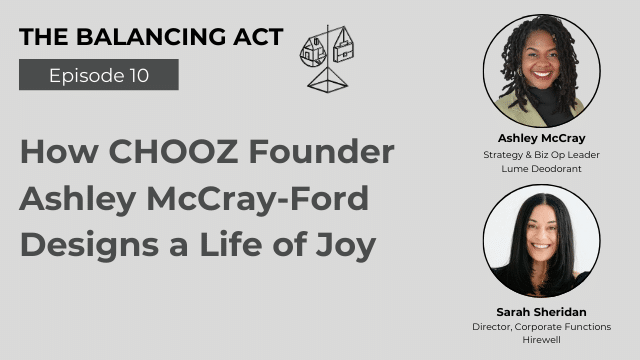
In this episode of The Balancing Act, Ashley McCray-Ford gets real about: Ashley’s story is raw, grounded, and refreshingly practical. If you’ve ever felt...
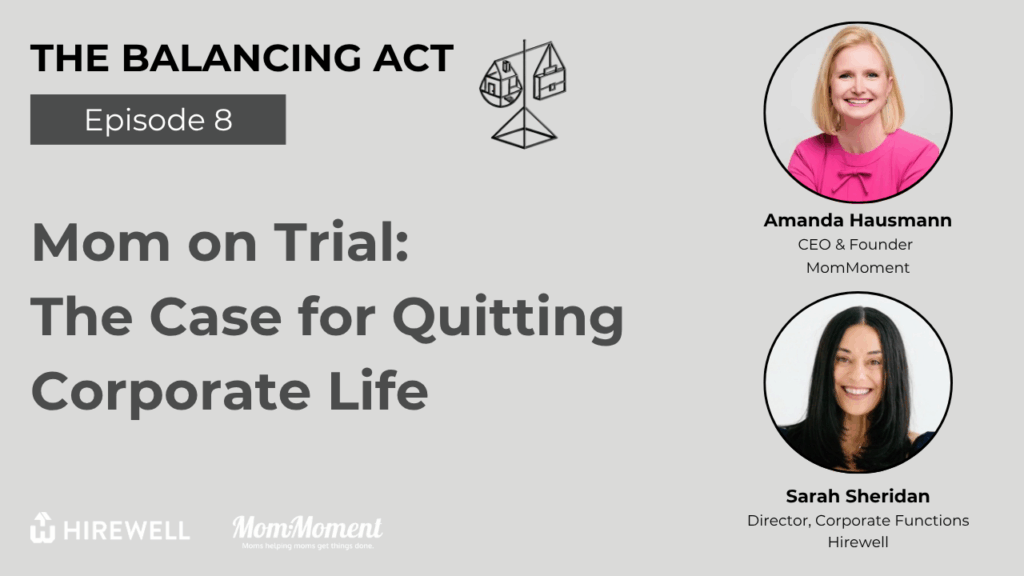
Sarah Sheridan sat down with Amanda Hausmann, a former attorney who hit her limit juggling work and motherhood — and turned her burnout...
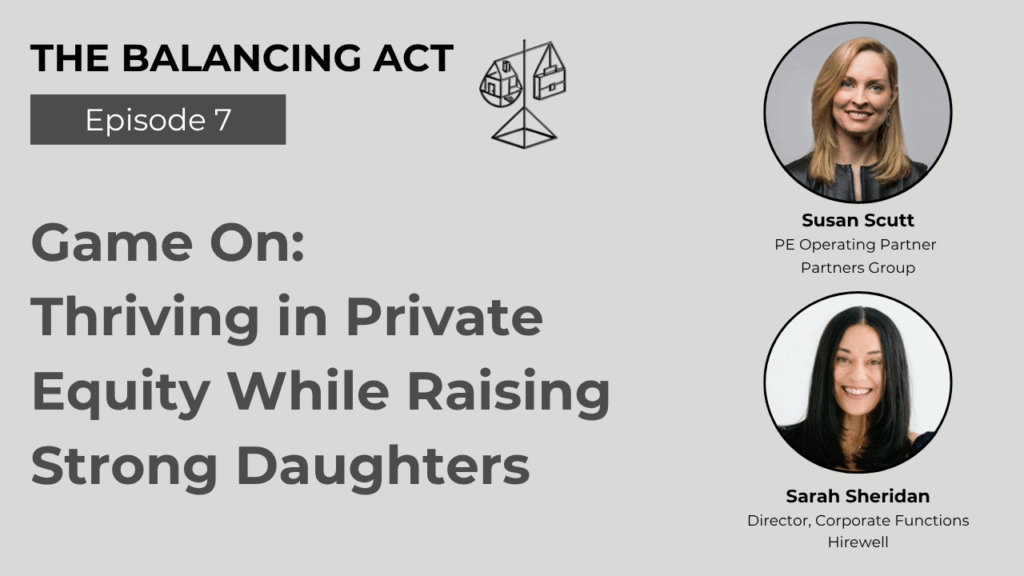
Six years off. One massive comeback. Zero regrets. In this episode of The Balancing Act, Sarah Sheridan sits down with Susan Scutt, private...
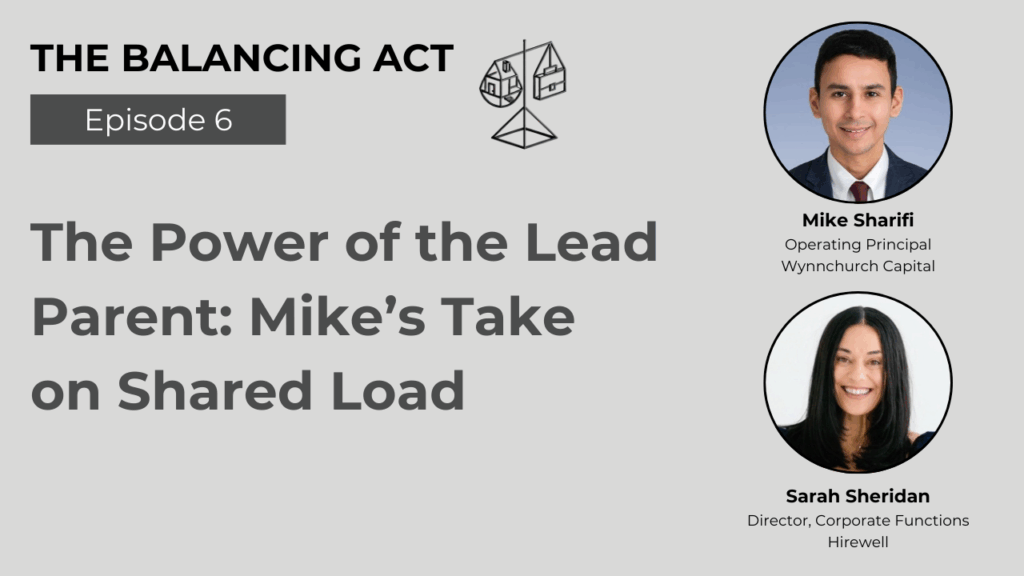
This week, Sarah Sheridan chats with Mike Sharifi, a private equity exec and dad of two, about what it really takes to show...
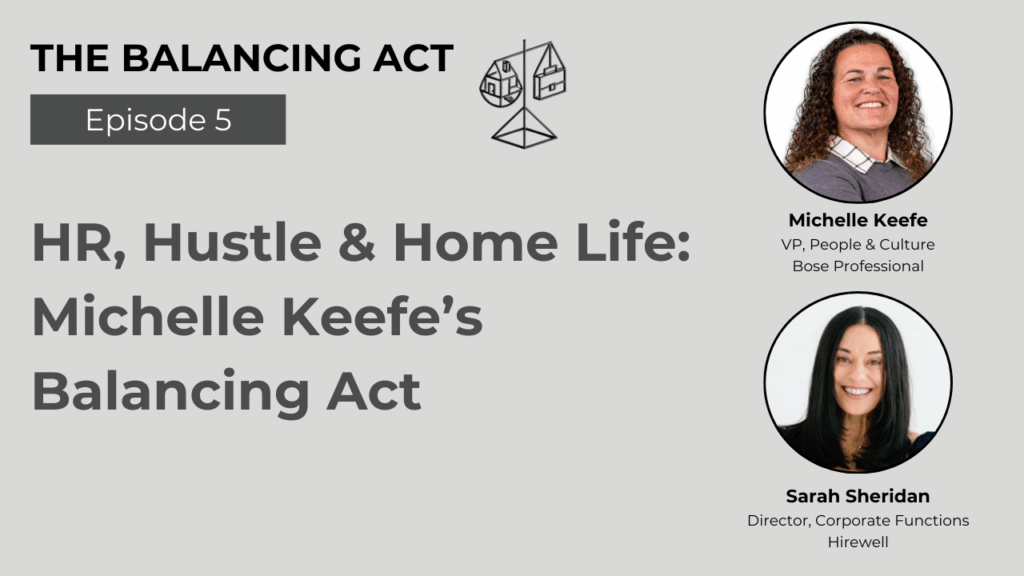
In this episode of The Balancing Act, host Sarah Sheridan sits down with Michelle Keefe, VP of HR at Bose Professional, to talk...
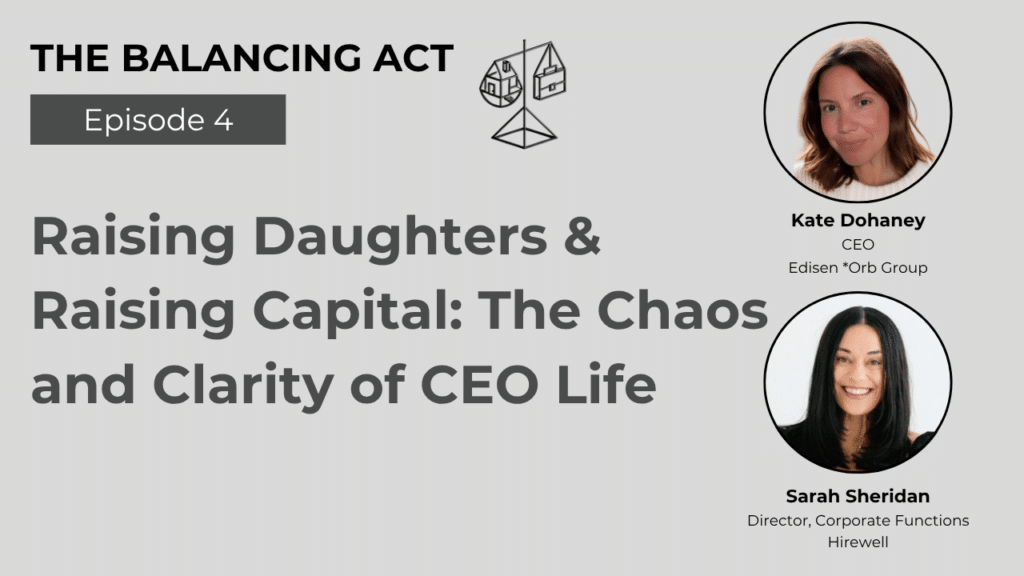
In this episode of The Balancing Act, host Sarah Sheridan interviews Kate Dohaney, the global CEO of Orb Group and mom to two....
Our Shows







Our Latest Blog
No results found.